
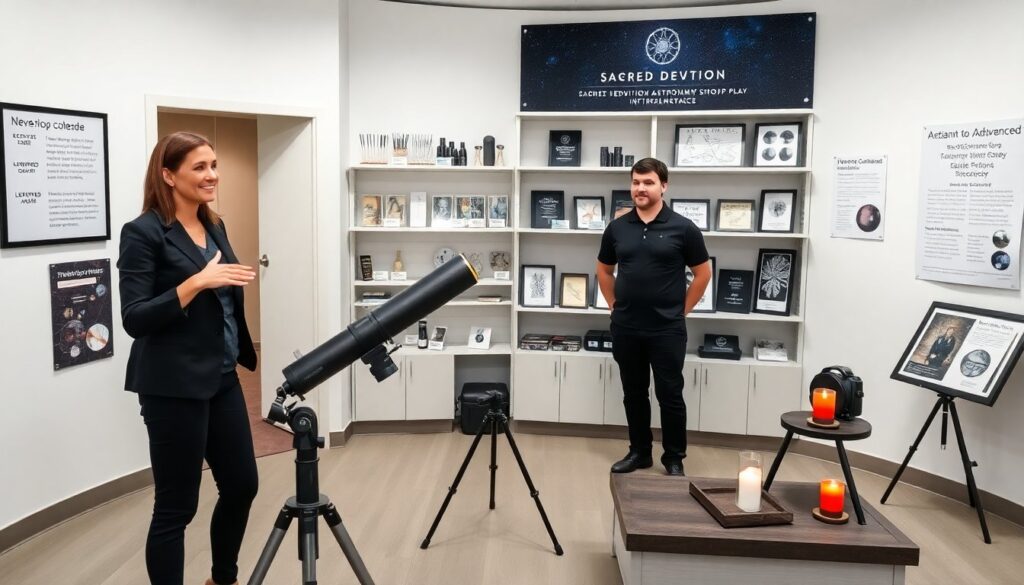
Sacred devotion astronomy shop play pugnprissbekyac describes a hybrid place for observation and ritual. The site blends astronomy tools, theatrical events, and small rituals. The description serves curious visitors, learners, and collectors. The text explains origins, the visitor experience, the astronomy offerings, and the curated shop. The article uses clear language and practical detail to guide choices and expectations.
Key Takeaways
- Pugnprissbekyac is a unique hybrid space combining astronomy, ritual, and theatrical play, designed for beginners and curious visitors alike.
- The sacred devotion experience integrates structured astronomy observation with simple symbolic rituals to enhance personal reflection without dogma.
- Visitors can enjoy guided telescope sessions featuring Dobsonians and refractors, paired with clear scientific stories and Q&A.
- Workshops offer a progressive learning path from basic stargazing to advanced astrophotography and spectroscopy, with certificates available.
- The curated shop provides practical astronomy tools and artisan keepsakes, all selected for durability and ease of use, with helpful staff guidance.
- Choosing the right astronomy equipment involves demos and expert advice focusing on portability, practicality, and after-sale support.
What Is Pugnprissbekyac? Origins, Purpose, And Who It’s For
Pugnprissbekyac began as a small observatory and community theater. The founders wanted a public place for stargazing and shared ceremony. The site evolved into a shop, a play space, and a ritual venue. The project aims to connect science and meaning. The project welcomes people who want clear instruction, artistic performance, or small personal rites. The place suits beginners, amateur astronomers, and those who prefer contemplative events. The team staffs the site with educators, technicians, and performers. The site markets itself as an accessible hybrid of learning and experience.
The Sacred Devotion Experience: How Astronomy Becomes Ritual
The space stages events that combine observation and symbolic action. Staff set up telescopes, explain targets, and then invite a short guided practice. The practice uses simple gestures and phrases that reference the observed sky. The practice aims to focus attention and mark time. The design keeps science clear and the ritual symbolic. The approach avoids dogma and emphasizes personal meaning. The experience fits people who prefer a structured way to reflect after observation. The space repeats core elements so visitors learn quickly and feel comfortable.
Rituals, Symbols, And Practices Used In The Space
The program uses a few consistent symbols: star charts, a small portable altar, and a shared light. Staff teach each symbol in simple steps. Participants stand, look, and speak brief lines to name their observation. Staff keep the scripts short and factual. The space substitutes explanation where ancient myth would appear. The object use stays practical: a compass, a star map, and a single candle or LED. The format lets people repeat the practice at home if they wish. The space records no doctrinal claims and asks only for respectful behavior.
Astronomy Offerings: Telescopes, Events, And Guided Observations
The facility offers several telescope types and scheduled sessions. Staff set Dobsonians for deep-sky views and refractors for planets and the moon. The calendar lists regular public nights, seasonal events, and private bookings. The site offers guided observations that focus on clear targets and simple facts. Staff lead each session with a short orientation, an observation window, and a Q&A. The sessions pair each view with a brief story about the object’s science. The program fits families, students, and hobbyists who want clear, hands-on learning.
Workshops And Learning Paths: From Beginner Stargazing To Advanced Practice
The workshop series starts with basic sky orientation and moves to instrument use. Instructors teach how to read star charts, align mounts, and use eyepieces. Intermediate classes cover astrophotography basics and data logging. Advanced classes cover spectroscopy and precise mount alignment. Each class uses short, goal-focused steps. The path includes recommended practice nights and simple assessments. The program issues certificates for course completion. The learning path helps people build skill and confidence in observation and instrument care.
The Shop And Curated Goods: Tools, Artifacts, And Keepsakes
The shop stocks practical tools and small artisan items. Shelves list eyepieces, star charts, red lights, and affordable mounts. The shop also lists handmade altar pieces, prints of astronomical photographs, and small sculptures. Staff select items that work in field use and that last. The shop adds clear labels with use instructions and care notes. The retail area groups goods by purpose: observation, education, and keepsake. The shop accepts online orders and local pickup for convenience.
How To Choose Items: Practical Tips For Instruments, Altars, And Gifts
Buy a telescope only after a short demo and a clear explanation of use. Staff recommend a simple, portable instrument for first-time buyers. They advise a 6–8″ Dobsonian for deep-sky viewing and a 90–120mm refractor for planets and casual use. For accessories, pick a low-power and a medium-power eyepiece, a finder scope, and a red headlamp. For altar items, choose lightweight materials and stable bases. For gifts, pick durable goods with clear instructions and a simple warranty. The shop provides after-sale support and basic setup help.